|
| |
Market Wrap: pre-opening session |
|
|
| |
|
|
|
| |
U.S. market futures gain some ground following reports that Iran's supreme leader called for proposals outlining acceptable terms to end the war.
On Monday, major U.S. indices finished higher after Anthropic filed its S-1 registration statement for an initial public offering. Investors also braced for a busy week highlighted by the Federal Reserve's rate decision on Wednesday and major tech earnings.
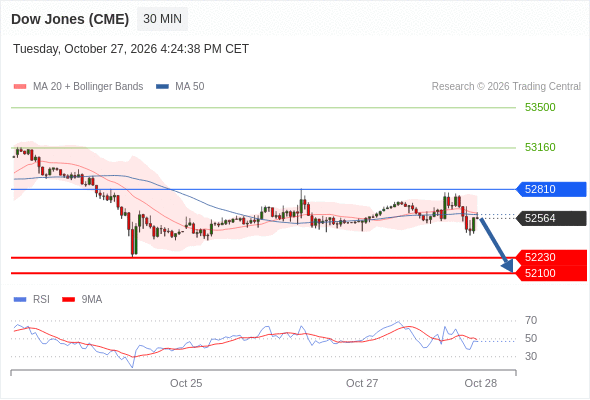
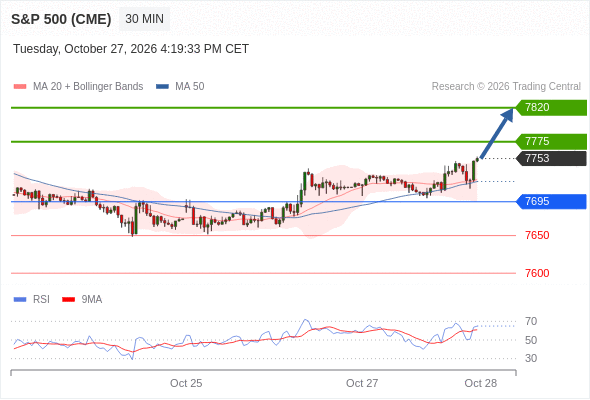
The S&P 500 advanced 53 points (+0.70%) to 7,676, the Nasdaq 100 jumped 315 points (+1.09%) to 29,273, and the Dow Jones gained 146 points (+0.28%) to 52,361.
On the stat front in the U.S., durable goods orders are expected to rise 1.5% month-on-month in September after being flat in August. Separately new home sales are seen at 650,000 in September vs 684,000 a month earlier. Also, the Conference Board Consumer Confidence Index is forecast to at 81.0 in October vs 81.9 in September. Finally the Richmond Fed Manufacturing Index is estimated at 1 in October vs -2 a month earlier.
European indices trade mixed, yet rebounding from their intraday lows.
Asian indices were mixed.
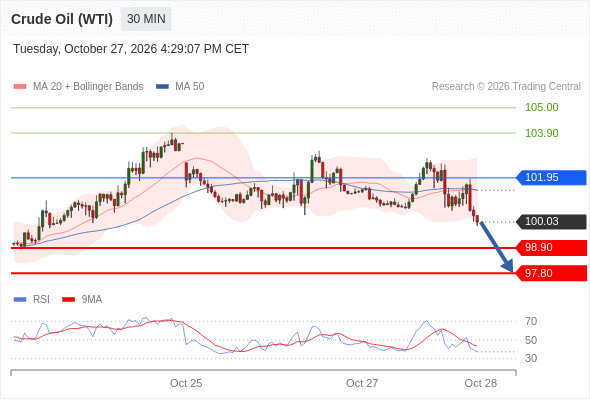
WTI crude oil prices are volatile but hold above 100 dollars.
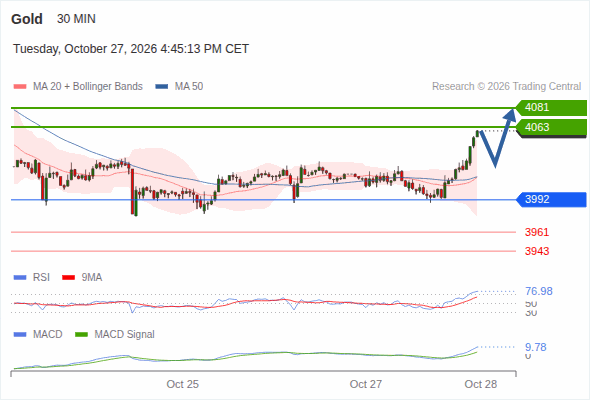
Gold is little changed, holding above a key technical support area around 3,980 dollars.
Bitcoin loses some ground, breaking below the 80,000 dollars threshold.
|
| |
|
|
|
|
|
|
|
|
| |
Nvidia (NVDA) and Meta Platforms (META), tech giants, "announced they will partner to expand their work on Muse and the Muse family of models to improve inference and training performance, reflecting popular demand for useful AI agents. In addition, Nvidia will invest 3 billion dollars in Meta’s equity offering".
Coca-Cola (KO), a soft drinks giant, is marginally higher after raising full-year earnings guidance
UPS (UPS), a global package delivery company, rises after lifting full-year guidance.
General Motors (GM), an automobile manufacturer, "announced that it will transfer the listing of its common stock to the Nasdaq from the NYSE. The Common Stock is expected to continue to be listed under the NYSE ticker symbol "GM" through market close on November 16, 2026. The company expects to begin trading as a Nasdaq-listed company on November 17, 2026".
Whirlpool (WHR), a producer of major home appliances, tumbles after lowering full-year sales guidance. Moreover, quarterly financial figures missed estimates.
JetBlue Airways (JBLU), an airline, jumps as CEO Joanna Geraghty said margins are improving.
Cadence Design Systems (CDNS), an electronic design automation software and engineering services company, gains some ground as quarterly financial figures slightly beat expectations. Also, the company lifted full-year sales guidance.
Royal Caribbean Cruises (RCL), a cruise company, loses ground as current quarter earnings forecast missed estimates.
|
| |
|
|
|
|
|
|
|
|
| |
Visa Inc (V)
Coca-Cola Co (KO)
Boeing Co (BA)
Seagate Technology Holdings PLC (STX)
S&P Global Inc (SPGI)
Corning Inc (GLW)
HCA Healthcare Inc (HCA)
Waste Management Inc (WM)
Freeport-McMoRan Inc (FCX)
American Tower Corp (AMT)
|
| |
|
|
|
|
|
|
|
|
| |
On Monday, the S&P/TSX Composite Index advanced 0.44% to 35,944 and the S&P/TSX 60 Index rose 0.41% to 2,139.
Celestica (CLS), a global leader in data center infrastructure and advanced technology solutions, soars after lifting full-year guidance. Moreover, quarterly financial figures topped expectations.
BCE (BCE), a communications company, "announced that its wholly owned subsidiary Bell Canada has entered into a definitive agreement with global investment group La Caisse, which will acquire a 49.9% stake in a newly formed wireless tower infrastructure company for a purchase price of 2.45 billion dollars, subject to customary adjustments. The transaction values the tower company at approximately 4.91 billion dollars and surfaces significant value in BCE's infrastructure".
Baytex Energy (BTE), an energy company, was rated "buy" in a new coverage at Jefferies.
TMX Group (X)'s, an integrated exchange group, target price was raised to 67 dollars from 61 dollars at TD Cowen.
Bombardier (BBD/B)'s, a global leader in aviation, target price was raised to 337 dollars from 320 dollars at TD Cowen.
PrairieSky (PSK), a royalty company, reported quarterly net income up to 84.5 million dollars from 45.9 million dollars a year earlier, on sales up to 165.0 million dollars from 114.8 million dollars a year ago. Target price was raised to 40 dollars from 39 dollars at TD Cowen.
|
| |
|
|
|
|
|